

The manufacturing industry is evolving from a competition focused on reducing labor and product costs and improving overall efficiency and quality to a competition focused on comprehensively meeting customer requirements and actively developing new products. With the advancement and development of advanced technologies such as computer control, changes have also occurred in the field of surface grinder manufacturing in recent years.
Surface grinders are crucial in industry and are used to manufacture parts and industrial tools. They require smooth movement and proper operation. They are also used in industries requiring precisely defined shapes, such as automotive parts. Cast iron, steel, brass, plastic, and aluminum are some of the materials that can be ground using surface grinders. Let's take a look at surface grinders.
1. What is a surface grinder?
A surface grinder consists of a grinding wheel covered with a hard abrasive, a chuck, and a
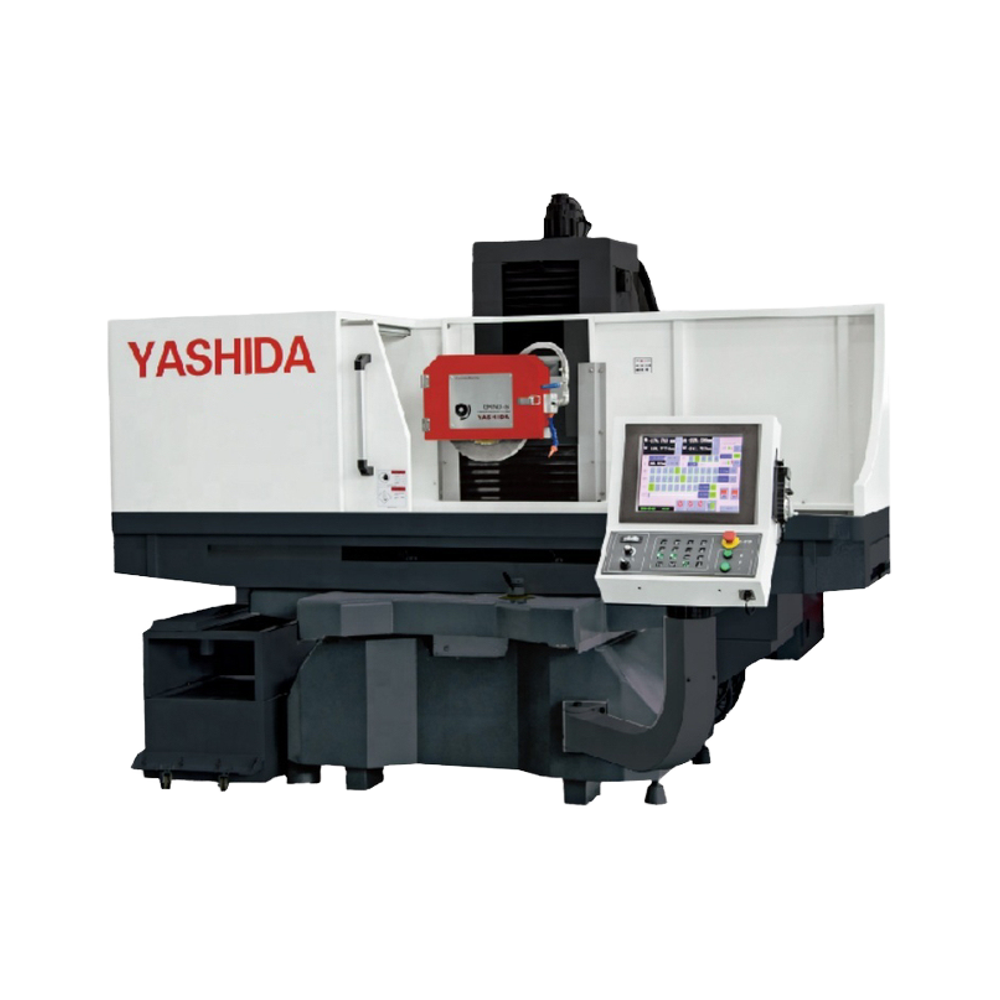
A surface grinder is a type of machine used for grinding flat or shaped surfaces. It is suitable for machining materials such as hard steel and carbide, as well as brittle materials like glass and granite; machining precision mechanical parts; trimming materials within a tenth of an inch (0.0002 inch); grinding cutting tools; and grinding punches and dies. A surface grinder typically consists of a worktable-like electromagnetic chuck, a grinding wheel fixed to a rotating spindle, and several handwheels for manual operation.
Surface grinders are one of the most common types of grinding machines found in ordinary workshops. Surface grinders are primarily categorized by the shape of their worktable: rectangular or circular. The primary parameters of rectangular table surface grinders are their width and length, while those of circular table surface grinders are primarily based on their worktable diameter. Major types include horizontal rectangular tables, horizontal rotary tables, vertical rectangular tables, vertical rotary tables, and various specialized surface grinders.

A surface grinder is a type of machine used for grinding flat or shaped surfaces. It is suitable for machining materials such as hard steel and carbide, as well as brittle materials like glass and granite; machining precision mechanical parts; trimming materials within a tenth of an inch (0.0002 inch); grinding cutting tools; and grinding punches and dies. A surface grinder typically consists of a worktable-like electromagnetic chuck, a grinding wheel fixed to a rotating spindle, and several handwheels for manual operation.
Surface grinders are one of the most common types of grinding machines found in ordinary workshops. Surface grinders are primarily categorized by the shape of their worktable: rectangular or circular. The primary parameters of rectangular table surface grinders are their width and length, while those of circular table surface grinders are primarily based on their worktable diameter. Major types include horizontal rectangular tables, horizontal rotary tables, vertical rectangular tables, vertical rotary tables, and various specialized surface grinders.
2. What should you pay attention to when using a surface grinder?
A surface grinder is a tool that uses a fixed, abrasive, rotating wheel to shave or shape metal surfaces. If used improperly, a surface grinder can be dangerous. Therefore, before using a surface grinder, it's important to understand the following:
1. Ensure the grinder has a functioning emergency start/stop button (emergency stop) within easy reach of the operator.
2. Install the grinding wheel according to the manufacturer's instructions and always inspect the wheel for damage or wear before each use to ensure it is properly maintained and in good working condition.
3. Ensure the wheel guard covers at least half of the grinding wheel.
4. Ensure all parts, switches, and plugs are in good working order.
6. Ensure the material you are shaping is compatible with the grinder. Soft materials such as aluminum or brass may clog the grinding wheel and prevent it from operating effectively.
7. Ensure the material is securely held in place with a vise.
8. Before starting the grinder, check that the wheel is clear of the workpiece.
9. Run a new grinding wheel for approximately one minute before putting it into service.
10. Wait until the wheel reaches maximum speed before using it, as unseen faults may exist.
11. Turn off the coolant before stopping the wheel to avoid creating an unbalanced condition.
This website uses cookies to ensure you get the best experience on our website.
 Español
 Portugues
 Pусский
 العربية



 Phone
Phone
Comment
(0)