

**How to Achieve Consistent Quality in Centerless Grinding Machine Operations**

**Introduction**
Centerless grinding is a precision machining process used to achieve tight tolerances and superior surface finishes on cylindrical workpieces. Unlike traditional grinding methods, centerless grinding does not require the workpiece to be held between centers or chucks, allowing for high production rates and excellent roundness control. However, maintaining consistent quality in centerless grinding requires careful attention to machine setup, process parameters, and operator expertise.
This article explores key strategies to ensure consistent quality in centerless grinding operations, covering machine setup, wheel selection, workpiece handling, and process monitoring.
---
**1. Proper Machine Setup and Alignment**
A well-aligned centerless grinding machine is fundamental to achieving consistent results. Misalignment can lead to taper, out-of-roundness, and surface defects.
**Key Setup Considerations:**
- **Regulating Wheel Angle:** The regulating wheel must be set at a slight angle (typically 1° to 5°) to provide axial feed motion. Incorrect angles can cause inconsistent feed rates and poor surface finish.
- **Work Rest Blade Height:** The workpiece must be positioned correctly relative to the grinding and regulating wheels. If the work rest blade is too high or too low, it can cause vibration and poor roundness.
- **Wheel Alignment:** Both the grinding and regulating wheels must be parallel to avoid taper in the workpiece.
**Best Practices:**
- Use precision alignment tools (e.g., dial indicators, laser alignment systems).
- Regularly check and adjust machine components to prevent wear-related misalignment.
---
**2. Selection of Grinding and Regulating Wheels**
The choice of grinding and regulating wheels significantly impacts surface finish, dimensional accuracy, and cycle times.
**Grinding Wheel Selection:**
- **Abrasive Type:** Aluminum oxide (for steel), silicon carbide (for non-ferrous materials), or CBN (for hardened materials).
- **Grit Size:** Finer grits (e.g., 80-120) for fine finishes, coarser grits (e.g., 46-60) for heavy stock removal.
- **Bond Type:** Vitrified (most common), resin, or metal bonds depending on application.
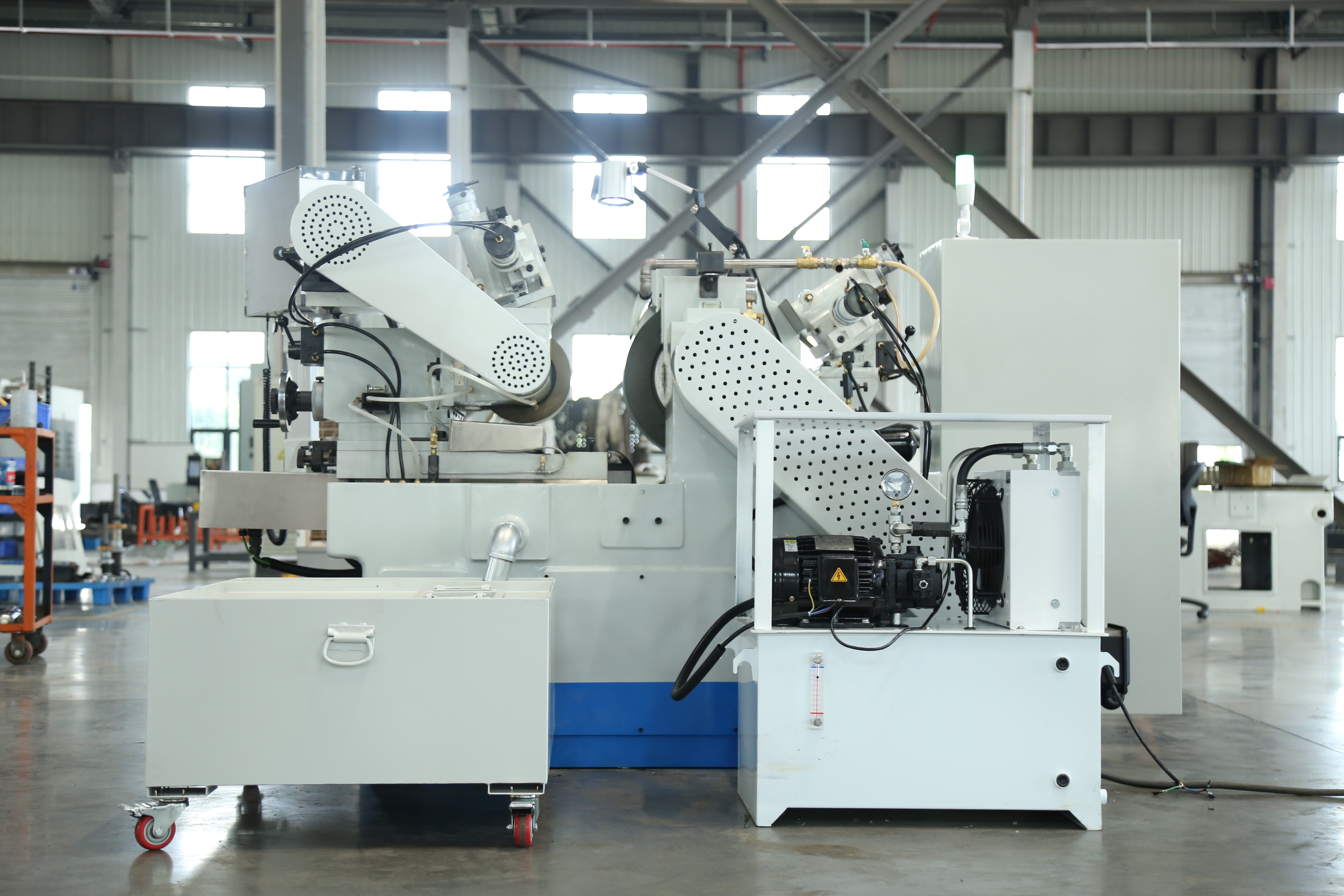
**Regulating Wheel Selection:**
- Rubber-bonded or resin-bonded wheels are preferred for better control of workpiece rotation.
- The hardness of the regulating wheel should match the grinding wheel to prevent workpiece slippage.
**Best Practices:**
- Match wheel specifications to material hardness and desired finish.
- Dress wheels properly to maintain sharpness and prevent glazing.
---
**3. Workpiece Handling and Support**
Proper workpiece handling ensures stability and minimizes vibration, which can lead to chatter marks and dimensional variations.
**Key Considerations:**
- **Work Rest Blade Material:** Use hardened steel or carbide for durability and minimal deflection.
- **Workpiece Support Length:** The blade should support at least 60-70% of the workpiece length to prevent bending.
- **Feed Rate Control:** Too fast can cause chatter, too slow can lead to overheating.
**Best Practices:**
- Ensure consistent workpiece size before grinding (pre-machining helps).
- Use steady rests or guides for long or slender workpieces.
---
**4. Optimal Grinding Parameters**
The right combination of speed, feed, and depth of cut is critical for consistent quality.
**Key Parameters:**
- **Grinding Wheel Speed:** Typically 5,000–10,000 SFPM (surface feet per minute).
- **Regulating Wheel Speed:** Adjustable to control feed rate (usually 50–300 RPM).
- **Infeed Rate:** Depends on material and finish requirements (typically 0.0005–0.005 inches per pass).
**Best Practices:**
- Start with conservative settings and optimize based on results.
- Monitor power consumption to detect wheel wear or loading.
---
**5. Dressing and Truing of Wheels**
Wheel dressing maintains cutting efficiency and prevents workpiece defects.
**Key Techniques:**
- **Single-Point Diamond Dresser:** For precision dressing.
- **Rotary Diamond Dresser:** For faster, more consistent results.
- **Coolant Application:** Prevents thermal damage during dressing.
**Best Practices:**
- Dress wheels regularly to maintain sharpness.
- Use proper coolant flow to prevent wheel loading.
---
**6. Coolant and Lubrication Management**
Coolant plays a vital role in preventing thermal damage, improving surface finish, and extending wheel life.
**Key Considerations:**
- **Coolant Type:** Water-soluble oils for general grinding, synthetic coolants for high-speed operations.
- **Flow Rate and Pressure:** Ensure adequate coverage of the grinding zone.
- **Filtration System:** Remove metal particles to prevent wheel loading.
**Best Practices:**
- Monitor coolant concentration and cleanliness.
- Position nozzles correctly for optimal cooling.
---
**7. Process Monitoring and Quality Control**
Real-time monitoring and inspection ensure consistency and early defect detection.
**Key Methods:**
- **In-Process Gauging:** Automated measuring systems for real-time feedback.
- **Surface Finish Testing:** Profilometers to check roughness.
- **Statistical Process Control (SPC):** Track trends and prevent deviations.
**Best Practices:**
- Implement automated inspection where possible.
- Train operators to recognize and troubleshoot defects.
---
**Conclusion**
Achieving consistent quality in centerless grinding requires a combination of proper machine setup, wheel selection, workpiece handling, and process control. By following best practices in alignment, wheel maintenance, coolant management, and inspection, manufacturers can ensure high precision, efficiency, and repeatability in their grinding operations.
Continuous training and adherence to standardized procedures further enhance consistency, making centerless grinding a reliable method for high-volume precision machining.
---
This guide provides a comprehensive approach to maintaining quality in centerless grinding. Would you like additional details on any specific aspect?
This website uses cookies to ensure you get the best experience on our website.
 Español
 Portugues
 Pусский
 العربية



 Phone
Phone
Comment
(0)