

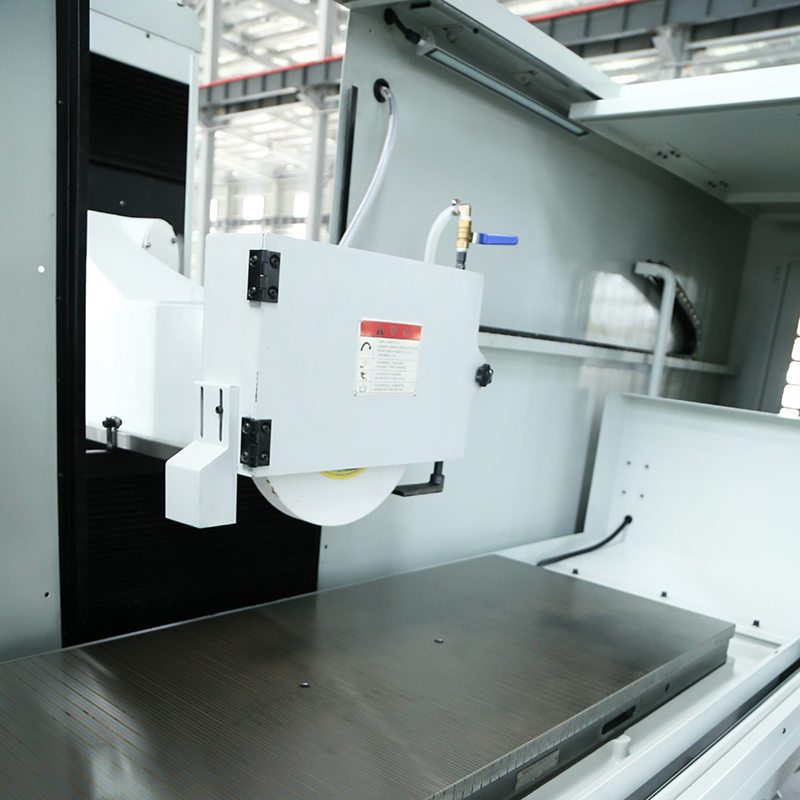
In modern manufacturing, surface grinding and CNC Milling are two common machining methods.
Although they seem similar, they differ significantly in their machining objectives, precision, and application scenarios. Understanding these differences helps companies choose the most suitable machining solution.
Surface machining encompasses various methods, including planing, milling, broaching, and grinding. In production, planing and milling are often used for roughing and semi-finishing of surfaces, while grinding focuses more on finishing needs.
Additionally, there are finishing methods such as scraping, lapping, ultra-finishing, and polishing, which can further improve the surface quality of surfaces.
The choice of machining method requires comprehensive consideration of the part's shape, size, material properties, technical requirements, production type, and the factory's existing equipment resources.
Surface grinding is a finishing process that uses a high-speed rotating grinding wheel to perform micro-cuts on the workpiece, primarily to obtain a high-precision and smooth surface.
Surface grinding stands out from other surface grinding methods due to its high cutting speed, small feed rate, easily controllable dimensional accuracy, and ability to achieve low surface roughness values.
Its machining accuracy typically reaches IT7 to IT5, while surface roughness values can reach Ra1.6 to 0.2μm. This grinding method surpasses planing and milling in terms of machining quality and is particularly suitable for machining hardened parts.
Surface grinding mainly includes two methods: surface grinding and end grinding. Surface grinding is often used to machine parts with extremely high precision requirements, achieving high machining accuracy and excellent surface quality.
End grinding, due to its large contact area between the grinding wheel and the workpiece, is suitable for larger grinding feeds and is widely used in mass production for surface machining of parts with lower precision requirements.
This process is usually used after milling or turning to improve the final dimensional accuracy and surface quality of the workpiece, and is particularly suitable for machining parts with high flatness requirements.
Milling plays a crucial role in surface machining, with wide and diverse applications.
With the help of various milling machines, milling cutters, and accessories, milling can easily handle the machining of planes, grooves, curved surfaces, helical grooves, gears, cams, and special-shaped surfaces, as shown in Figure 8-5.
After rough milling and finish milling, the dimensional accuracy can reach IT9~IT7 level, while the surface roughness value can be controlled within the range of Ra12.5~0.63μm.
CNC milling is a machining method that uses a rotating cutting tool to cut the workpiece, mainly used to remove large amounts of material and machine complex shapes.
Through CNC system control, various complex structures can be machined, such as grooves, holes, and curved surfaces.
The main motion in the milling process is the rotational motion of the milling cutter, while the feed motion is the linear motion of the workpiece.
This motion relationship not only affects the milling effect but also directly impacts the milling efficiency.
Milling parameters refer to the four key parameters involved in the milling process, including milling speed and feed rate. The proper selection of these parameters is crucial to the milling effect and efficiency.
Milling speed, or the cutting speed of the milling cutter during rotation, is calculated using the formula: vc = π × d0 × n / 1000.
During milling, the entry and exit of the milling cutter generate impact forces, which not only shorten tool life but also induce periodic vibrations.
However, because the cutting action of the cutter teeth is intermittent, their cooling time in the air is relatively long, which provides good heat dissipation for the milling cutter, thus contributing to improved durability to some extent.
Feed rate refers to the distance the workpiece moves relative to the milling cutter, and it can be expressed in several ways. Choosing the appropriate feed rate achieves the best machining results.
Milling, with its multi-edged cutting characteristics and selectable high cutting speeds, exhibits excellent production efficiency.
Therefore, in medium-batch and larger production, milling is often used to machine planes. When machining large planes, gantry milling machines come in handy.
From a processing characteristic perspective, the two differ significantly:
| Comparison Items | Surface Grinding | CNC Milling |
| Processing Purpose | Finishing | Roughing/Shaping |
| Processing Accuracy | Extremely High (≤0.002 mm) | Medium-High |
| Surface Quality | Excellent (Ra 0.2–0.4 μm) | Average |
| Material Removal | Low | High |
| Applicable Materials | High Hardness Materials | Wide Range |
| Processing Type | Flat Machining | Complex Structures |
Therefore, it can be seen that surface grinding is more suitable for precision machining, while milling is more suitable for preliminary shaping.
When processing requirements include high precision, high flatness, and high surface finish, surface grinding should be preferred.
For example, it is more suitable in mold processing or the machining of some precision parts.
When machining complex structures or removing large amounts of material is required, CNC milling is more advantageous, such as roughing of parts, machining of complex contours, and grooving and drilling.
In actual production, these two processes are usually used in combination.
Preliminary machining is first performed using CNC milling, followed by final precision and surface quality achieved through surface grinding. This combination ensures both efficiency and accuracy.
Surface grinding and CNC milling each play a specific role in the manufacturing process.
The rational selection or combination of these two processes can significantly improve processing efficiency and product quality, making them indispensable tools in modern manufacturing.
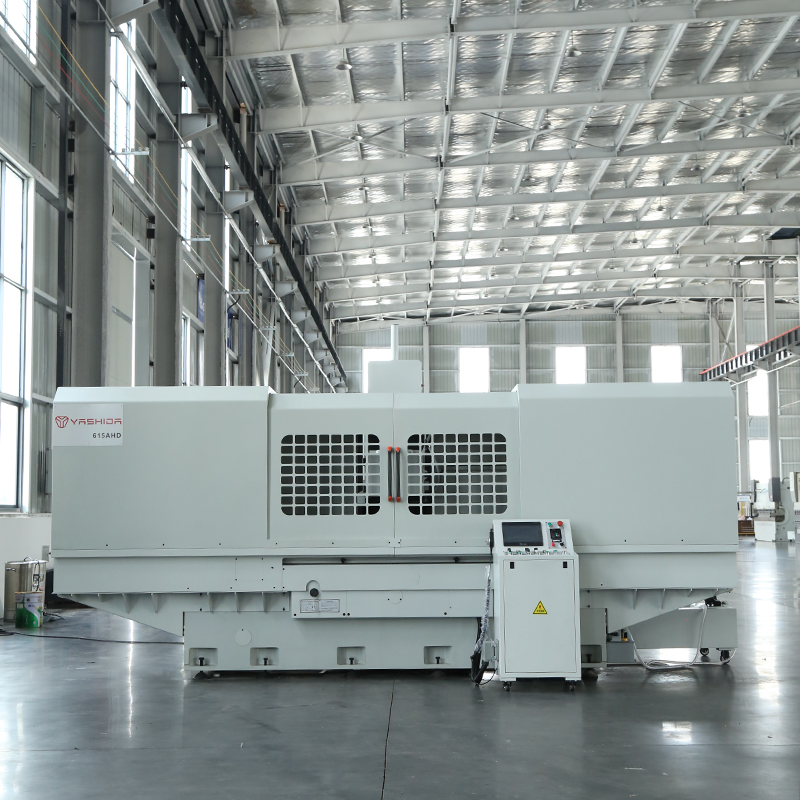
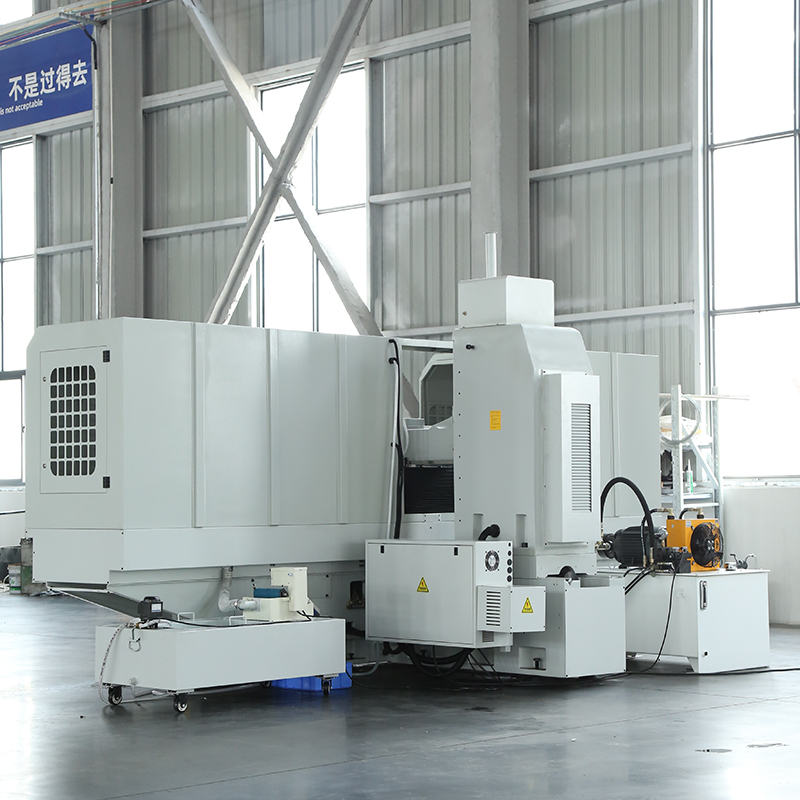
As a supplier of high-precision surface grinders, YASHIDA Grinding Machines specializes in high-Precision Surface Grinding.
We offer various models of manual, automatic, and surface grinders, such as the 450, 615AHD, and 5012NC. If you need a surface grinder, please contact us!
Recommended Products:
YALITA 450 manual surface grinding machine
YASHIDA 615AHD automatic surface grinding machine
YAHSHIDA 5012NC CNC surface grinding machine
How Accurate Can a High-Precision Surface Grinding Machine Be?
What Is Surface Grinding Machine used for?
How to Control Surface Roughness of High-precision CNC surface grinding machines?
Key Technical Parameters of surface grinding machines: Which Indicators are Most Important?
This website uses cookies to ensure you get the best experience on our website.
 Español
 Portugues
 Pусский
 العربية



 Phone
Phone
Comment
(0)